Telescopic Roller Conveyor
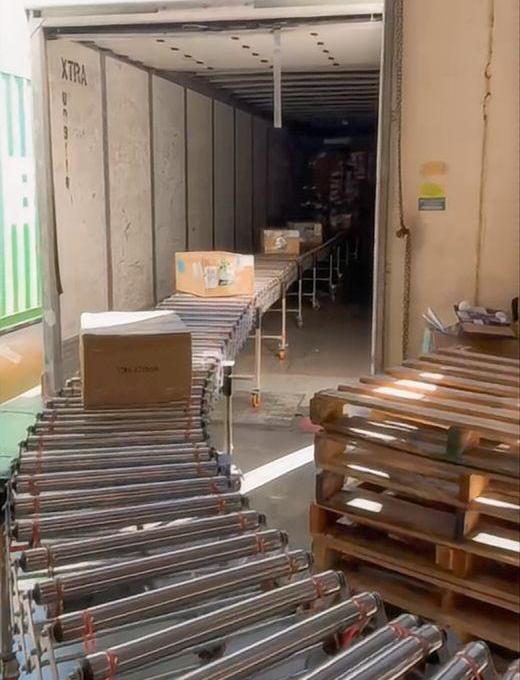
Dock-level truck and container loading: For sites with a loading dock where the trailer floor sits level with the platform, and for flat in-plant transport.
Open pageCustom loading & unloading conveyors, built to fit your site
Loading & Unloading Solutions
Hand-loading a vehicle is three problems at once: the distance into the body, the weight carried per piece, and the height difference between your floor and the bed. Conveyor equipment removes all three: the machine carries cargo to where a person stacks it, at whatever height the vehicle presents.
We supply conveyor equipment that moves cargo between your dock or yard and the truck or container: telescopic conveyors that reach deep into the vehicle, hydraulic lifts that bridge the height when there is no dock, and belt conveyors for mixed parcel volumes. The configuration is set by your loading height, vehicle mix and cargo.
Almost every enquiry falls into one of these. Which one you are in decides the equipment before anything else does.
Truck loading
With a dock, the trailer floor already meets your platform, so the conveyor only has to bridge the gap and reach inward: For sites with a loading dock where the trailer floor sits level with the platform, and for flat in-plant transport. Without a dock, the machine has to create the working height itself before it can reach at all.
Container loading & unloading
Containers are a reach problem: the cargo has to travel further than in a truck, and the floor is often at ground level. A ground-level container setup uses the belt line's mobile arrangement. No-dock setup: mobile high stand + hydraulic lift arm + front operator platform + tail incline line; one operator per end.
Each of the three lines solves a different part of the loading problem. Most sites run one; mixed fleets often run two.
Dock-level truck and container loading: For sites with a loading dock where the trailer floor sits level with the platform, and for flat in-plant transport.
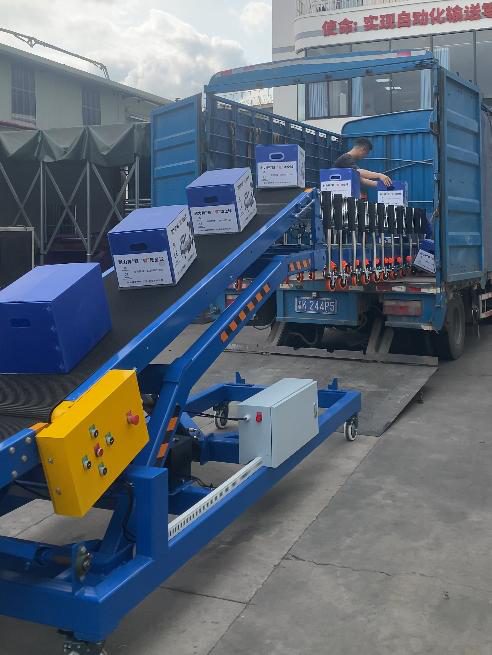
Open pageGround-level loading with no dock: For ground-level loading without a loading dock.
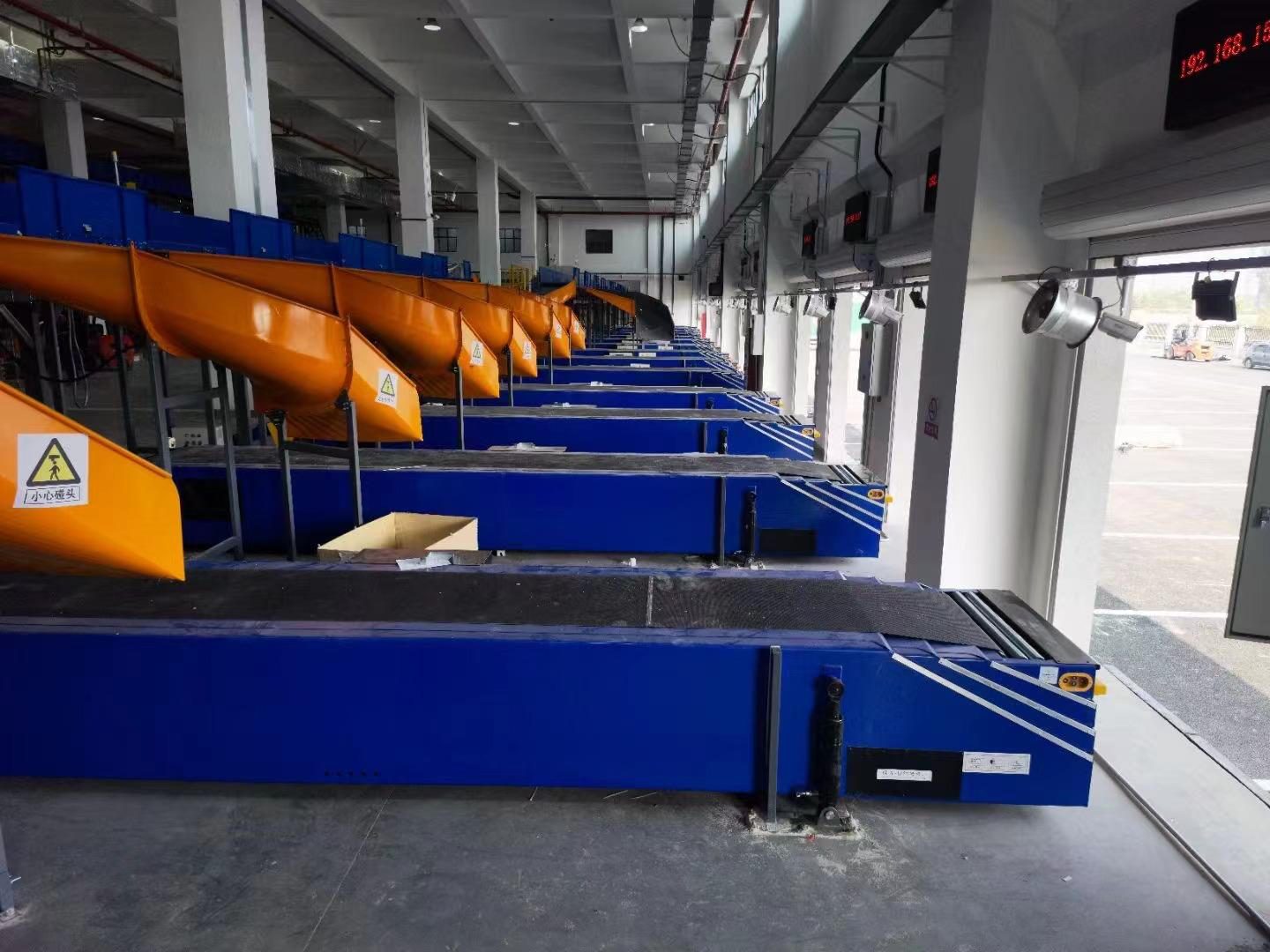
Open pageMixed parcel volumes, dock or no-dock: Built for express and logistics parks and cargo with mixed package types and sizes; works with or without a loading dock.
Open pageThese five inputs decide the configuration. Send them with your enquiry and the recommendation comes back with drawings instead of questions.
With a dock, the platform already meets the trailer floor. Without one, the gap is bridged by a hydraulic lift section: Platform lifts from ground level 40 cm to 95 cm; incline section 3 m; max working height 2.4 m.
Suits all vehicle body types below 17.5 m semi-trailers, and handles both light and heavy cargo.
Bagged cargo, flat-bottom cartons, foam boxes, totes and mixed parcels each behave differently on rollers versus a belt.
How far into the body cargo must be placed sets the extension stroke, the single most common reason a line is undersized.
Where the unit parks when not in use, and what power is available at that position.
The sequence below is the same one used for every order; the full stage-by-stage detail lives on the process page.
Loading height, vehicle lengths, door widths and the space available when the unit is parked.
Dock or ground, cargo behaviour and reach depth decide which of the three lines applies.
The proposed setup is drawn with dimensions so you can check it against your building before anything is ordered.
Dimensions, technical requirements, quotation and production arrangements are agreed, then the unit is built.
Often yes, if the extension stroke covers the deeper of the two. Tell us both vehicle types and we will size the line to the one that needs the most reach.
Ground-level loading needs equipment that creates the working height. For ground-level loading without a loading dock.
Built for express and logistics parks and cargo with mixed package types and sizes; works with or without a loading dock.
No-dock setup: mobile high stand + hydraulic lift arm + front operator platform + tail incline line; one operator per end.
Reach is a configuration decision, not a fixed figure: it is set by the body length you load and how deep cargo must be placed. Send the body length and we will specify the stroke.
The five selection factors on this page: loading height, vehicle types, cargo description, required reach depth, and the space and power available.
Dock height, vehicle mix and cargo. Our team will recommend a suitable configuration and follow up with product information.
Get a Free Quote