
Loading section: dock
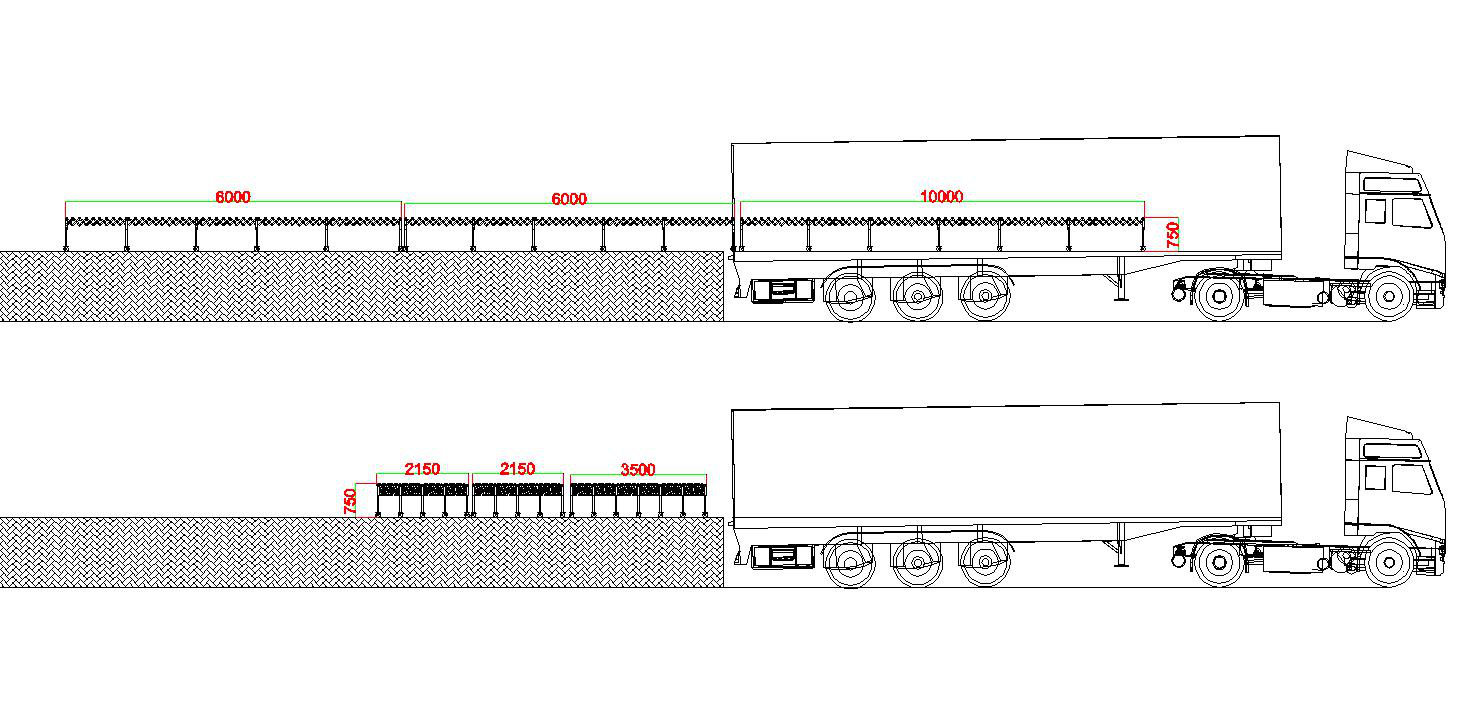
For sites with a loading dock where the trailer floor sits level with the platform, and for flat in-plant transport.
Open pageCustom loading & unloading conveyors, built to fit your site
Integrated Conveyor Systems
A loading conveyor is one section of a longer flow. Cargo arrives in a vehicle, crosses the loading point, travels through the building and ends at sorting or storage, and every handover between those sections is a place where throughput is lost.
We help you select and configure conveyor equipment that connects your loading bay or yard to your warehouse, from the truck or container, through the conveying line, to the sorting or storage area. Each system is laid out around your building, your vehicles and your cargo.
Systems are specified by section rather than by machine, because each section solves a different problem in the flow.
Where cargo crosses between the vehicle and the building: For sites with a loading dock where the trailer floor sits level with the platform, and for flat in-plant transport.
The run inside the building, sized to distance and throughput: Built for express and logistics parks and cargo with mixed package types and sizes; works with or without a loading dock.
Height changes, turns and merges between sections, the parts that decide whether the line flows or bottlenecks.
Drive units and control logic that keep the sections running as one line rather than as separate machines.
Three layouts cover most enquiries. They are starting points for a drawing, not fixed products.
The simplest complete system: cargo leaves the trailer at platform height and travels in a straight run to sorting or storage.
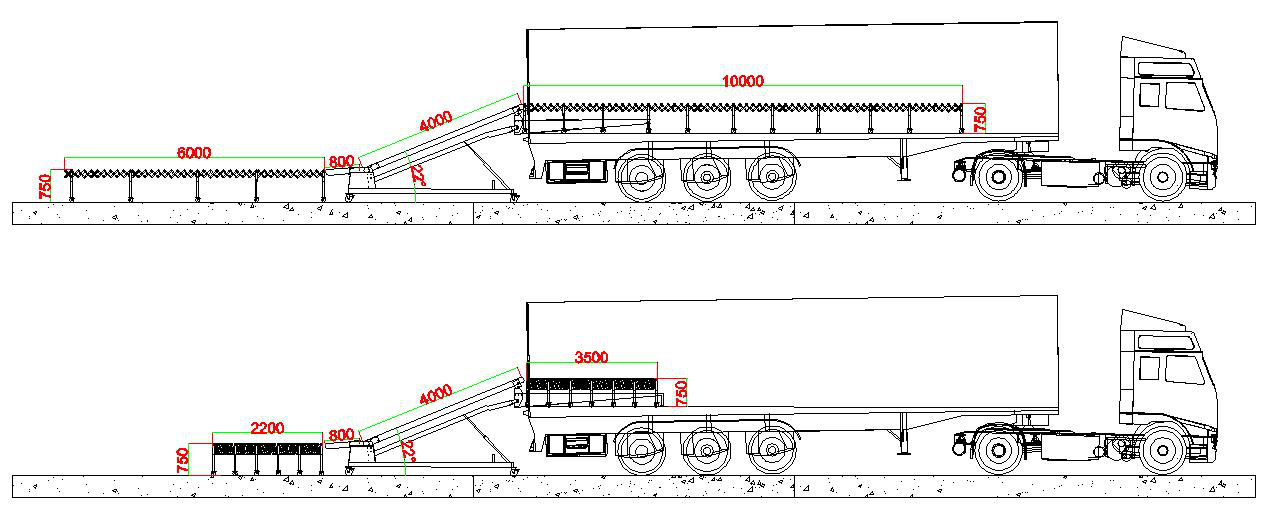
For sites with no dock: the hydraulic section creates the working height, then a belt run carries mixed parcels to sorting.
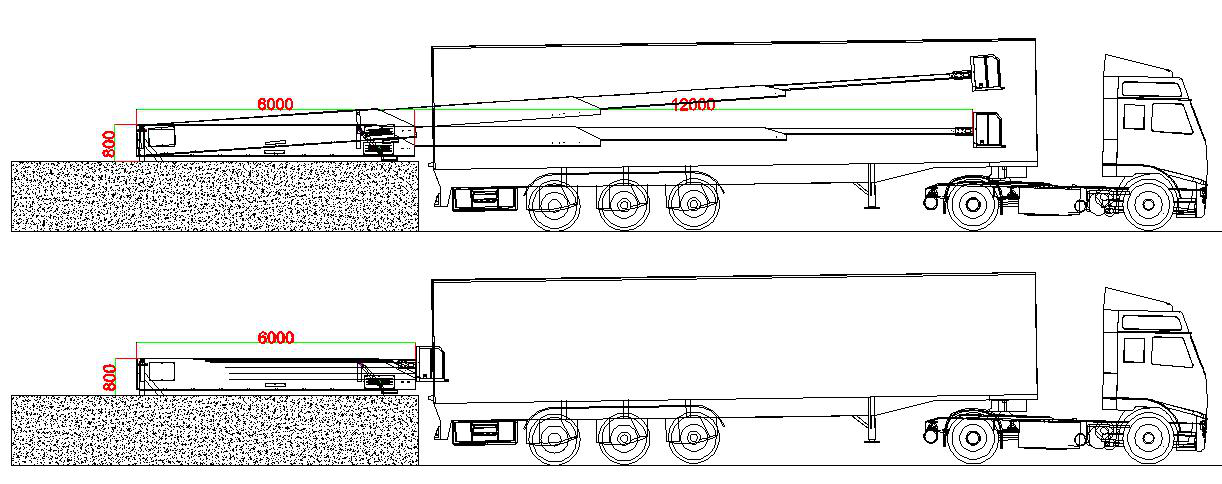
Several loading bays feed one downstream line, with merges combining the flows before sorting. Long runs are built in sections: Each unit is a non-standard custom build to your site dimensions; long lines are built in sections and retract compactly when not in use.
Each section is then matched to the equipment that suits it and to the vehicles you receive: Suits all vehicle body types below 17.5 m semi-trailers, and handles both light and heavy cargo.
For sites with a loading dock where the trailer floor sits level with the platform, and for flat in-plant transport.
Open pageFor ground-level loading without a loading dock.
Open pageBuilt for express and logistics parks and cargo with mixed package types and sizes; works with or without a loading dock.
Open pageSystems are built around the building, not the other way round, which is why measurement comes first.
Loading heights, door positions, available runs inside the building and where the flow has to end.
Loading, conveying, transitions and controls, each specified on its own before they are connected.
Each section is matched to the line that suits it, and to the vehicles and cargo you handle.
The complete layout is drawn with dimensions so the sections can be checked against your building.
Dimensions, technical requirements, quotation and production arrangements are agreed before build.
If cargo is stacked a short distance from the vehicle, a loading conveyor alone is usually enough. A system earns its keep once the run continues into the building or several bays feed one line.
Yes in most cases. The connection dimensions of your existing line are one of the measurements we ask for. Send a photo and the dimensions of the interface.
Throughput is set section by section: the slowest section caps the line. Tell us the parcels or pieces per hour you need at the end of the run and we will size each section to it.
Section lengths, transitions and merges, heights, and where operators stand, enough to check the layout against your building before anything is ordered.
Long runs are built in sections and retract compactly when not in use: Each unit is a non-standard custom build to your site dimensions; long lines are built in sections and retract compactly when not in use. That is what makes later extension practical.
A sketch or photos of the loading area and the run inside the building, the vehicle types you receive, your cargo, and the throughput you need at the end of the line.
Dock height, vehicle mix and cargo. Our team will recommend a suitable configuration and follow up with product information.
Get a Free Quote